What is
- Violence: is the intentional use of physical force or power, threatened or actual, against oneself, another person, or against a group or community, which either results in or has a high likelihood of resulting in injury, psychological harm, mal-development, deprivation or death.
- Gender Based Violence is any form of violence against an individual based on biological sex, gender identity or expression, or perceived adherence to socially-defined expectations of what it means to be a man or woman, boy or girl.
What are the Forms of Violence?
- Physical violence: occurs when someone uses a part of their body or an object to control a person’s actions and causes harm. It includes plucking out hair, biting, choking, kicking, slapping, burning and shoving.
- Sexual violence: occurs when a person is forced to unwillingly take part in sexual activity and entails non-consensual sexual act or behaviour. It includes rape, marital rape, gang rape, attempted rape, sexual assault, indecent act, sexual harrassment and defilement
- Economic violence involves making or attempting to make a person financially dependent by maintaining total control over financial resources, withholding access to money, and/or forbidding attendance at school or employment.
- Psychological/emotional violence: any threat or act of humiliation, exploitation, intimidation, psychological degradation, verbal aggression and deprivation of freedom and rights.
Are there any other types of violence?
- Harmful traditional practices include: Female genital mutilation (FGM), Sex slavery, Denial of rights to control one’s fertility, Sex discrimination, Early/forced marriages, Dowry-related murder, Selective malnourishment of female children, infanticide
- Intimate Partner Violence: This refers to violence by an intimate partner or ex-partner, defined as husband or wife, boyfriend or girlfriend or lover. It can include physical, sexual or emotional violence, economic abuse and controlling behaviour.
- Bullying is unwanted repeated/habitual aggressive behaviour to an individual that causes physical, psychological or emotional harm to a person perceived to be vulnerable.
- Online/virtual violence is any act of violence that is committed, assisted or aggravated by the use of information and communication technology like texts, emails, mobile phones, social media and computer games against a person. The types include;
Cyberbullying-involves the sending of intimidating or threatening messages
Non-consensual sexting– involves the sending of explicit messages or photos without the recipient’s consent.
Doxing– involves the public release of private or identifying information about the victim.
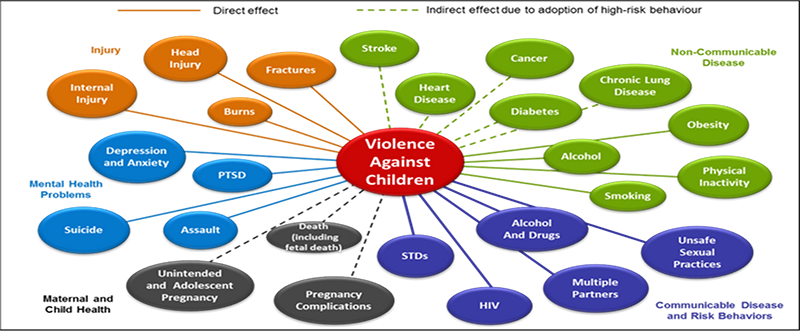
- Violence Against Children: All forms of violence against people under 18- maltreatment, bullying, youth violence, IPV, sexual, emotional or psychological violence.
What are the causes and contributing factors to violence?
- Root causes of GBV include gender inequality, the abuse of power, harmful norms and discrimination.
- Contributing/precipitating factors are factors that perpetuate GBV or increase risk of GBV and influence the type and extent of GBV in any setting. They include: poor cultural norms, poverty, alcohol and drug abuse, media influence and illiteracy, conflict, religion, pandemics
What is the GBV situation in Kenya
- 45% of women and 44% of men aged 15-49 have experienced physical violence since age 15.
- The main perpetrators of physical violence against women are husbands; whereas, the main perpetrators against men are parents, teachers, and others.
- Fourteen percent of women and 6 percent of men aged 15-49 report having experienced sexual violence at least once in their lifetime.
- Forty-four percent of women and 27 percent of men have sought assistance from any source to stop the violence they have experienced
Female Genital mutilation(FGM)
- Refers to harmful practices that involve partial or total removal of the external female genitalia for non-medical reasons
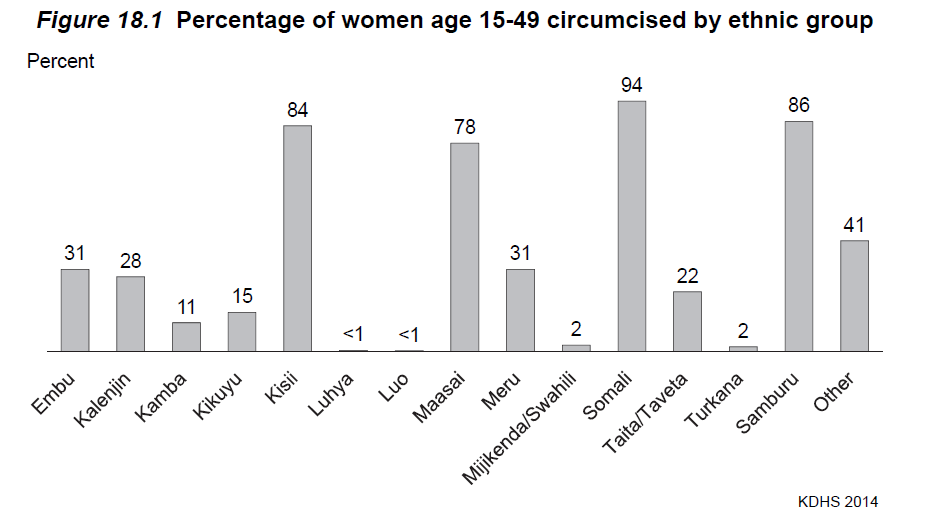
- 21% of girls and women aged between 15 to 49 years have undergone FGM
- 1 in 5 girls and women aged 15-49 have undergone medicalized FGM which is “FGM practiced by any category of health care provider, whether in a public or a private clinic, at home or elsewhere, including re-infibulation (re-stitching of the vaginal opening after it has been opened for childbirth in a woman who had previously undergone FGM) at any point in a woman’s life”
- Eight percent of girls age 0-14 have had their genital area sewn closed.
- Eleven percent or less of women and men believe that the practice of female genital cutting is required by their community or their religion or that the practice should continue.
Treatment of health complications of FGM in the 27 high prevalence countries costs 1.4 billion USD per year. Kenya is in the top 5.
Violence against children (VAC)
- Witnessing violence in the home in childhood is common among both females (52.0%) and males (51.5%) ages 18-24.
- 6% of females and 6.4 % of males experienced sexual violence before age 18
- Of the females that experience violence more than three out of five (62.2 %) experienced multiple incidents before age 18
- The most common reason (53.6%) females did not seek services for sexual violence was that they did not think it was a problem or did not need or want services
- One-third of youth who experienced sexual violence knew where to go for services for sexual violence but very few sought medical services (12.5% females and 3.2% males)
- Females who experienced childhood physical violence were also significantly more likely to have ever thought of suicide than those who did not experience childhood physical violence (23.7% versus 10.1%).
Intimate Partner violence (IPV)
- Overall, 39 percent of ever-married women and 9 percent of men age 15- 49 report have experienced spousal physical or sexual violence.
- Among women and men who have ever experienced spousal violence (physical or sexual), 39 percent and 24 percent, respectively, reported experiencing physical injuries.
- About half of females aged 13-24 years of age indicated it was acceptable for a husband to beat his wife for one or more reasons. While in males, it’s about 47.5% of the same age group.
Does experience of GBV have any effects?
- Immediate injuries such as fractures and haemorrhaging, and long-term physical conditions (e.g. gastrointestinal, central nervous system disorders, chronic pain);
- Mental illnesses, such as depression, anxiety, post-traumatic stress disorder, suicidal tendencies;
- Sexual and reproductive health problems, such as sexually transmitted infections (including HIV), and other chronic conditions; sexual dysfunction; unintended/unwanted pregnancies and unsafe abortion; risks to maternal and fetal health (especially in cases of abuse during pregnancy);
- Substance abuse (including alcohol);
- poor social functioning skills and social isolation and marginalisation;
- death for both women and their children (from neglect, injury, pregnancy-related-risks, homicide, suicide and/or HIV and AIDS-related);
- lost workdays, lower productivity and lower income;
- overall reduced or lost educational, employment, social, or political participation opportunities; and,
- expenditures (at the level of individual, family and public sector budgets) on medical, protection, judicial and social services.
Are there any Legal and Policy Framework in Kenya to address and prevent GBV
The following are some of the laws and policies governing GBV response and prevention in Kenya:
- The Constitution 2010
- The Sexual Offences Act, 2006
- Penal Code
- The Children’s Act
- The Protection against Domestic Violence Act
- Employment Act
- Prohibition of female genital mutilation (FGM) Act 2011
- National Guidelines on the Management of Sexual Violence
- National Policy for Prevention and Response to Gender Based Violence, 2014
What are the strategies implemented to Prevention and Response to GBV?
Implementation Considerations/ Approaches
- Human Rights Based Approach, which identifies rights holders and duty\bearers and their respective entitlements and obligations.
- Survivor-centred approach, which prioritises rights, needs, and wishes of the survivor.
- Gender-responsive approach, which recognizes the gender dynamics, impacts and consequences of GBV.
- Preventive approach, where actors focus on activities that lead to reduction of the incidence of GBV.
- Evidence based approach, which focuses on using factual and timely data to inform policy formulation and programming.
- Integrative and collaborative approach, which recognizes the complexity and multi-dimensional nature of GBV, and seeks to create linkages and logical chains of collaboration between actors in the different sectors
Where should report if I am violated
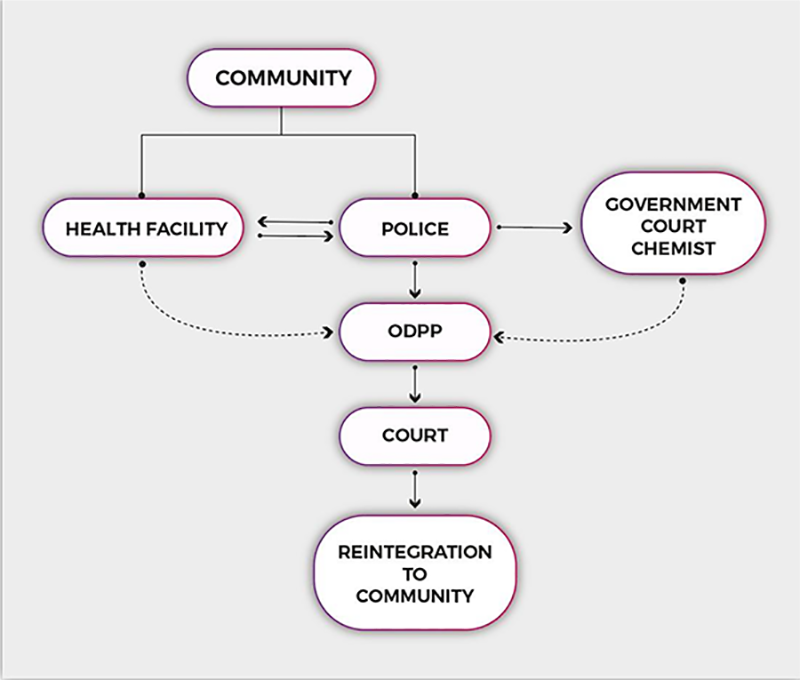
You can report GBV incidents at the nearest hospital or police station and or any administrative offices which includes the National Government Administrative Office (NGAO)- Nyumba Kumi, Chiefs, Religious and community leaders or any agency within.
Survivors of GBV can access or seek assistance from the following hotlines/contacts
- 1195 – HAK GBV hotline
- 1190/ 0800720121 – LVCT hotline
- 1517 – UNHCR help line
- 116- Child help line
- 1199- Kenya Red Cross Counselling Hotline
- 999 / 112 – National Police Service emergency hotline
What institutions work on GBV in Kenya
- Directorate of Gender in the Ministry of Devolution and Planning: The key government institution charged with coordination of GBV prevention and response interventions.
- National Gender and Equality Commission (NGEC): responsible for oversight on gender issues;
- Ministry of Health: Responsible for the delivery of quality services for GBV survivors/victims; the
- Criminal justice system: Responsible for enforcement of law and order; the Task Force for the Implementation of the Sexual Offences Act and other anti-GBV laws under the Office of the Director of Public Prosecutions (ODPP); Gender Units/Focal points in government ministries and agencies; the Police Gender Desks; the National Steering Committee to Combat Human Trafficking; and the Kenya Police Services Anti-Trafficking Unit among others
What is defilement?
- Is an act that causes the penetration of a child’s genital organs (private parts). A child is anyone below the age of 18 years in Kenya.
What is rape?
- Is an act done which causes the penetration of one person’s genital organs with the genital organs of another without their permission or where the permission is obtained by force, threats, or intimidation of any kind.
What should you do if Defiled or Raped·
- Go to a safe place and if possible, call a trustworthy person to offer support.
- Preserve all physical evidence of the assault. Do not shower, bathe, douche, eat, drink, wash your hands, or brush your teeth until after a medical examination. Save all of the clothing worn at the time of the assault. Place each item of clothing in a separate brown envelope. Do not use plastic bags. Do not clean and/ or take a shower.
- Get medical care as soon as possible (ideally within 2 hours but not later than 72 hours).
- Have a medical examination even if you think you do not have any physical injuries.
- Discuss with a health care provider the risk of exposure to sexually transmitted infections and the possibility of pregnancy resulting from the sexual assault. Having a medical exam is also a way to preserve physical evidence of a sexual assault.
- If you suspect that you may have been given a “rape drug,” ask the hospital or clinic where you receive medical care to take a urine sample. Write down as much as you can remember about the circumstances of the assault, including a description of the assailant.
- Get information whenever you have questions or concerns. After a sexual assault, you have a lot of choices and decisions to make, e.g. about getting medical care, making a police report, and telling other people. You may have concerns about the impact of the assault and the reactions of friends and family members.
- Talk to a counsellor who is trained to assist rape victims. Counselling can help you learn how to cope with the emotional and physical impacts of the assault.
Post Rape Care
Sexual Violence Survivors should go to the health facility immediately for the following reasons:
- To prevent pregnancy.
- To prevent infection with HIV or STDs
- To ensure that evidence is preserved correctly
- To provide psychosocial support for the victim.
What to expect at the hospital when you have been defiled or raped
- The survivor will be required to give consent for post-rape management.
- There will be physical examinations and samples of blood, urine, vaginal and anal fluids are taken for laboratory tests.
- Treatment for physical injuries
- Medication is given to prevent HIV, pregnancy, and sexually transmitted infections.
- Collection of rape evidence
- Post Rape Care Forms and the P3 Forms will be filled to follow up on the assault and you should keep a copy.
What should we do to prevent GBV
- Work together towards ending gender-based violence. Recognize that causes of GBV are not uniform throughout the country and that interventions will be county specific.
- Deliberately community gatekeepers, opinion, cultural and religious leaders in creating awareness on gender-based violence to reverse the trend.
- Promote a culture of reporting sexual and gender-based violence cases within communities
- Engage men and boys as allies, advocates, role models, champions, and change agents in advocacy against GBV.
- Leverage community and public engagement fora (barazas, nyumba kumi) to support in GBV prevention and response
- Encourage community-level dialogues to identify community-centred solutions to gender-based violence as well as address harmful cultural norms.
- Partner with education stakeholders, Nyumba kumi elders, and parents’ associations to encourage all children to attend and remain in school and transition to the next level. Create awareness of the School Re-entry Policy; and support in the identification, assessment, and placement of learners with special needs and disabilities
- Collaborate with cultural, community, and religious leaders prevent and response to GBV
- Support implementation of the National Policy for the Eradication of Female Genital Mutilation.
- Address alcohol and drug abuse within communities which predisposes people to GBV
- Increase the capacities of stakeholders to identify, prevent and respond appropriately to GBV
Assure full accountability by all stakeholders to prevent GBV